What Are Ghost Jobs and Why Are They Becoming a Concern?
Ghost Jobs are job advertisements published by companies for positions that they are not actively planning to fill. In some cases, the vacancy may have been filled already, placed on hold, or advertised only to collect resumes for future requirements.
Imagine spending hours updating your resume, writing a cover letter, and completing an application, only to discover that the company was never looking to hire for that position. That is the frustration many job seekers experience.
However, not every job advertisement that stays online for weeks is necessarily a ghost listing. Some positions genuinely take longer to fill because companies are looking for specialized skills, waiting for budget approval, or completing several interview rounds.
Why Do Companies Post Ghost Jobs?
You might wonder why an organization would advertise a position without actively hiring anyone. There are several possible reasons.

Building a Talent Pipeline
Some companies collect resumes to create a database of potential candidates. When a position becomes available, recruiters can contact people who have already expressed interest.

Showing Business Growth
Organizations may publish vacancies to create the impression that their business is expanding. This can influence how employees, competitors, investors, and potential candidates view the company.

Understanding the Talent Market
Employers sometimes advertise positions to understand the availability of skilled professionals, expected salary ranges, and competition for particular roles.

Hiring Plans on Hold
A company may initially approve a vacancy but later pause recruitment because of budget restrictions, internal restructuring, or changing business priorities.

Internal Hiring Decisions
Sometimes, an organization already has an internal candidate in mind but keeps the advertisement active to collect applications or follow its internal recruitment procedures.

Testing Candidate Interest
Some employers post vacancies to measure candidate interest and the number of applications received. This helps them understand talent demand without actively hiring.
The important thing to understand is that these situations are not always deliberate attempts to mislead candidates. Some listings remain active because of poor communication, outdated job board information, or changing hiring requirements.
How Common Are Ghost Jobs? What Do Recent Statistics Reveal?
This issue deserves attention because job seekers are already spending considerable time searching and applying for opportunities.
According to Huntr's Q1 2026 Job Search Trends Report, 93% of surveyed job seekers said they had applied to or suspected they had applied to a ghost job. The finding came from 559 survey respondents who answered that question. It reflects reported experiences, not a verified measurement of all job advertisements.
Another interesting finding comes from Ashby's 2025 analysis of more than 22,000 job postings between 2021 and 2024.
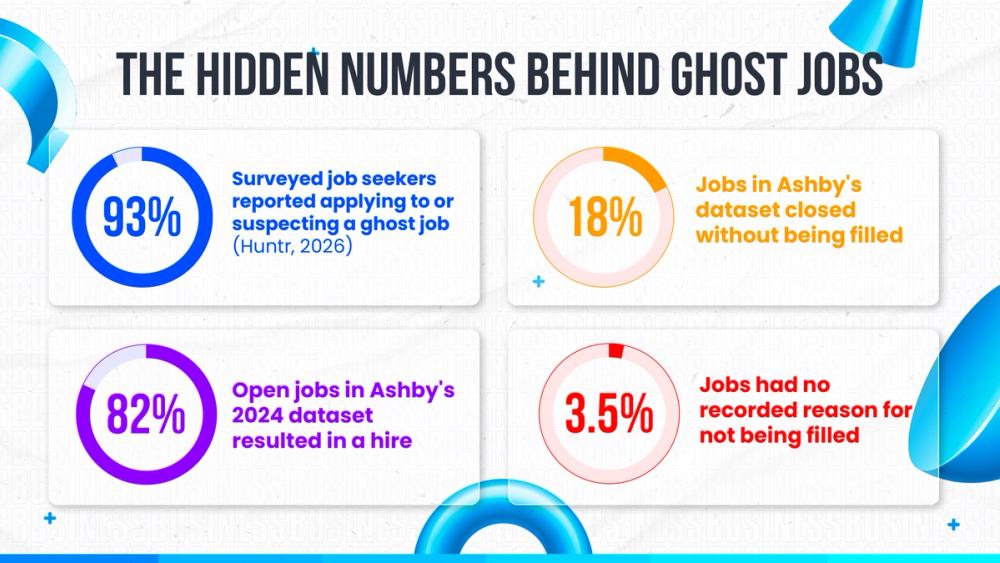
An important distinction: A job closing without a hire does not automatically make it a ghost job. Ashby's research found that many unfilled roles had been paused or had other recorded reasons.
The US Congressional Research Service also noted in its April 2025 report that there are no official statistics establishing the overall number of ghost job postings.
These findings show why job seekers should verify opportunities instead of assuming that every online vacancy represents an active hiring requirement.
How Can You Spot Ghost Jobs Before Applying?
To identify ghost job openings, check the posting date, visit the company's official careers page, review recent updates, and contact the recruiter to confirm whether the position is still available.
You do not need to spend hours investigating every company before submitting your resume. A few simple checks can help you identify warning signs and make better application decisions.
1. Check How Long the Job Has Been Listed
Look at the original posting date before applying. If a vacancy has been advertised for several months without any updates, it is worth investigating further.
However, remember that specialized positions and senior-level roles can take longer to fill.
What you can do: Check whether the company has recently updated the listing or published the same vacancy several times.
2. Verify the Job on the Company's Official Website
Found an interesting opportunity on a third-party job portal? Visit the company's official careers page and search for the same position.
If the advertisement is missing from the company's website, contact the recruitment team to confirm whether the vacancy is still active.
A missing listing is a warning sign, not proof. Job boards sometimes retain copied advertisements after the original vacancy has been removed.
3. Look for Repeated Job Advertisements
Have you noticed the same position appearing repeatedly with almost identical descriptions?
Repeated advertisements may indicate ongoing recruitment, but they can also suggest that the company is building a talent database or has not updated its hiring plans.
Compare the job descriptions, locations, experience requirements, and publication dates before deciding whether to apply.
4. Watch Out for Vague Job Descriptions
A genuine job description should explain what the position involves and what the employer expects from the candidate.
Be cautious when advertisements contain:
- Unclear job responsibilities.
- Missing experience or qualification requirements.
- No information about the department or reporting structure.
- Generic descriptions that could fit almost any position.
- No clear explanation of the hiring process.
A vague description does not automatically indicate a ghost listing, but it gives you a reason to investigate.
5. Check Whether the Recruiter Is Responding
Communication is an important part of the hiring process.
If the company provides recruiter contact information, try sending a short and professional message asking whether recruitment is currently active.
For example, you can ask whether the position is approved, whether applications are being reviewed, and whether there is an expected interview timeline.
A delayed response alone does not prove anything, but repeated unanswered enquiries combined with other warning signs deserve attention.
6. Check Whether the Position Has Already Been Filled
Sometimes companies forget to remove old vacancies after completing recruitment.
Before submitting another application, search for the job title on the company's careers page and check its latest recruitment announcements.
You can also look for updates from the company's official LinkedIn page. If the organization has already announced someone joining the same position, confirm whether additional openings are available.
Quick Checklist: Is This Job Worth Applying For?
Use this simple checklist before spending time on an application.
| What to verify | Warning sign |
| Posting date | Advertisement has remained unchanged for months |
| Company website | Vacancy cannot be verified |
| Job description | Responsibilities are unclear |
| Recruiter communication | No response or clear hiring information |
| Repeated listings | Same role keeps appearing without updates |
| Hiring status | Company cannot confirm whether the position is active |
Remember: One warning sign is not enough to label a company or vacancy as a ghost job. Look at the overall picture and verify information wherever possible.

What Should You Do Before Submitting a Ghost Job Application?
Before submitting a ghost job application, check whether the vacancy is active, review the company's recent hiring updates, and contact the recruiter to confirm that applications are being accepted.
Even after checking a vacancy, you may still be unsure whether the company is actively recruiting. Instead of immediately walking away from every uncertain opportunity, take a few practical steps.

Contact the Recruiter First
Send a short message asking whether the position is currently open and whether the hiring team is reviewing applications.

Research the Company
Visit the website, review its recent updates, check its LinkedIn activity. This can help, how they recruiting.

Tailor Your Resume
Avoid sending the same resume to every employer. Match your skills, experience, with the actual job requirements.

Application Tracker
Keep a record of the company, job title, application date, posting link, recruiter details. This helps you avoid repeatedly applying to the same inactive vacancy.

Personal Information
Never pay registration, interview, or job confirmation fees. Avoid sharing banking passwords, OTPs, or unnecessary sensitive information with unverified recruiters.

Follow Up's to Move On
If you do not receive a response after applying, send a polite follow-up to the recruiter. If there is still no update, focus on other verified job opportunities.
If a recruiter asks for money in exchange for a job offer, treat it as a serious scam warning rather than an ordinary recruitment requirement.
Tips to Make Your Job Search More Effective
Finding the right opportunity is not just about applying to more positions. It is about identifying relevant employers and using your time wisely.
Here are a few practical habits worth following:
- Prioritize verified vacancies: Start with official company career pages and trusted recruitment platforms.
- Apply early: Do not wait until a position has been advertised for several months.
- Build professional connections: Connect with recruiters and employees working in your target industry.
- Follow company updates: Monitor hiring announcements and business developments.
- Prepare a targeted resume: Highlight relevant skills and measurable achievements instead of using generic descriptions.
- Follow up professionally: If you have not received an update, send one polite follow-up after a reasonable period.
Smart Job Search: Four Things to Remember
🔎 Verify Before Applying
Check the employer's official careers page and confirm the vacancy.
📅 Track Every Application
Record application dates and follow-up details to stay organized.
🤝 Connect With Recruiters
Use professional networking to understand current hiring requirements.
🛡️ Stay Alert to Scams
Never pay money or share confidential information to secure a job.

How Can Employers Build Trust Through Transparent Hiring?
While job seekers need to be careful, employers also have an important responsibility. Every job advertisement represents an opportunity that someone may invest time and effort pursuing.
Companies can improve candidate trust by maintaining accurate vacancy information and communicating clearly throughout the recruitment process.
Here are some practices employers should follow:
- Remove filled or cancelled vacancies promptly.
- Clearly identify future talent-pool opportunities instead of presenting them as immediate vacancies.
- Share accurate job responsibilities and qualifications.
- Inform candidates when hiring is paused or delayed.
- Provide timely application updates.
- Keep job advertisements consistent across different recruitment platforms.
For recruitment teams, transparent communication is more than good practice. It helps protect employer reputation and creates a better candidate experience.
Finding genuine job opportunities requires the right guidance, reliable resources, and a clear understanding of hiring practices. As a workforce solutions provider, we help connect job seekers with relevant career opportunities while supporting businesses with their talent needs. Our focus is on making recruitment more transparent, efficient, and accessible for everyone.
Struggle to find right talent? Let's make hiring easier.
Conclusion
Searching for a job already requires patience, preparation, and consistent effort. Spending that time on vacancies that are not actively being filled can make the process even more frustrating. By checking posting dates, verifying company websites, researching recruiters, and tracking applications, you can make more informed career decisions.
Remember, a successful job search is not about sending hundreds of applications. It is about finding genuine opportunities that match your skills and career goals. At TekWissen, we believe that transparent recruitment practices and meaningful connections between employers and candidates are essential to building a better hiring experience. Stay informed, verify before applying, and make every application count.
Frequently Asked Questions
Related Blogs

Open Roles Piling Up? Can RPO Fix Recruitment Challenges?

What Makes a Resume Stand Out in 2027? Expert ATS Resume Tips for Job Seekers

Job Search Tips That Turn Applications Into Recruiter Callbacks

Is AI Resume Screening Changing How Recruiters Find Talent in 2027?

Reimagining Talent Acquisition: RPO in the Future Workforce Ecosystem

Why Recruitment Process Outsourcing Is Dominating Hiring Strategies in 2026 and Beyond